
 Blog
BlogCash Flow Projections: What are they and how do they work

A cash flow projection estimates the cash moving in and out of your business over a set period so you can predict liquidity and plan ahead. Its components run from opening balance to net cash flow and closing balance, and reliable projections rest on realistic, data-driven assumptions, regular reviews and scenario planning. Cloudfloat adds flexible payment solutions and real-time insights to keep projections on track.
What is Cash Flow Projection?
Cash flow projection is the process of estimating the inflow and outflow of cash over a specific period. It helps businesses predict their liquidity and plan for future expenses.
What are the Components of Cash Flow Projection?
Cash Inflows: Revenue from sales, loans, and other income sources.
Cash Outflows: Expenses such as payroll, rent, utilities, and loan repayments.
Opening Balance: The cash amount at the beginning of the projection period.
Net Cash Flow: The difference between inflows and outflows.
Closing Balance: The remaining cash at the end of the period.

What are the Components of Cash Flow Projection?
Choose a Projection Model
Short-term (3–12 months): For immediate planning and monitoring.
Long-term (12+ months): For strategic decision-making.
Combination: Address both immediate and long-term goals.
Gather Historical Data
Collect past financial data (cash inflows/outflows).
Analyse sales trends, seasonality, and customer payment habits.
Estimate Cash Inflows
Base estimates on sales forecasts, payment terms, and collection timelines.
Refine projections using historical data and market trends.
Approximate Cash Outflows
Categorise expenses (e.g., operations, loans, supplier payments, taxes).
Use historical data to forecast timing and amounts.
Determine Opening and Closing Balances
Opening Balance: Cash available at the start (equal to the previous period’s closing balance).
Closing Balance: Opening Balance + Cash Inflows - Cash Outflows.
Align Timing and Payment Terms
Factor in the timing of cash movements.
Align projections with customer and supplier payment terms.
Calculate Net Cash Flow
Net Cash Flow = Cash Inflows - Cash Outflows.
Pro Tip: This helps you understand your future cash position clearly.
Plan for Contingencies
Build buffers for unexpected events like late payments or economic shifts.
Use Rolling Forecasts
Regularly update projections based on actual performance and changing conditions.
Benefit: Provides a dynamic, accurate view of your cash flow.
This simplified approach ensures clear, actionable cash flow projections to support your business decisions.
What are the Benefits of Cash Flow Projection?
Better Financial Planning: Avoid surprises by anticipating shortages or surpluses.
Informed Decision-Making: Plan investments or cost-cutting measures effectively.
Improved Cash Management: Optimise your payment schedules.
Crisis Prevention: Proactively address cash flow gaps before they escalate.
Differences Between Cash Flow Projection and Cash Flow Forecast
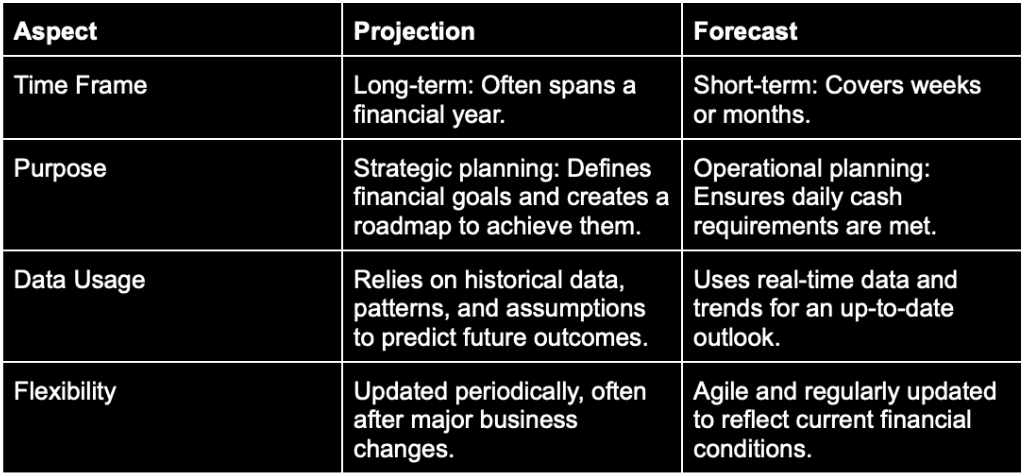
A Cash Flow Projection focuses on the long-term financial outlook, using expected income and expenses to plan for the future.
A Cash Flow Forecast provides a shorter-term view, predicting day-to-day cash flow outcomes essential for managing liquidity.
What are the Benefits of Cash Flow Projection?
Calculating projected cash flow involves estimating how much money will come in and go out of your business over a specific time. Here’s a straightforward process:
Add up cash inflows
Sales revenue
Other income
Add up cash outflows
Operating costs
Loan payments
Other expenses
Calculate net cash flow
Net cash flow = cash inflows - cash outflows
Determine closing balance
Closing balance = opening balance + net cash flow
What does a cash flow projection look like?
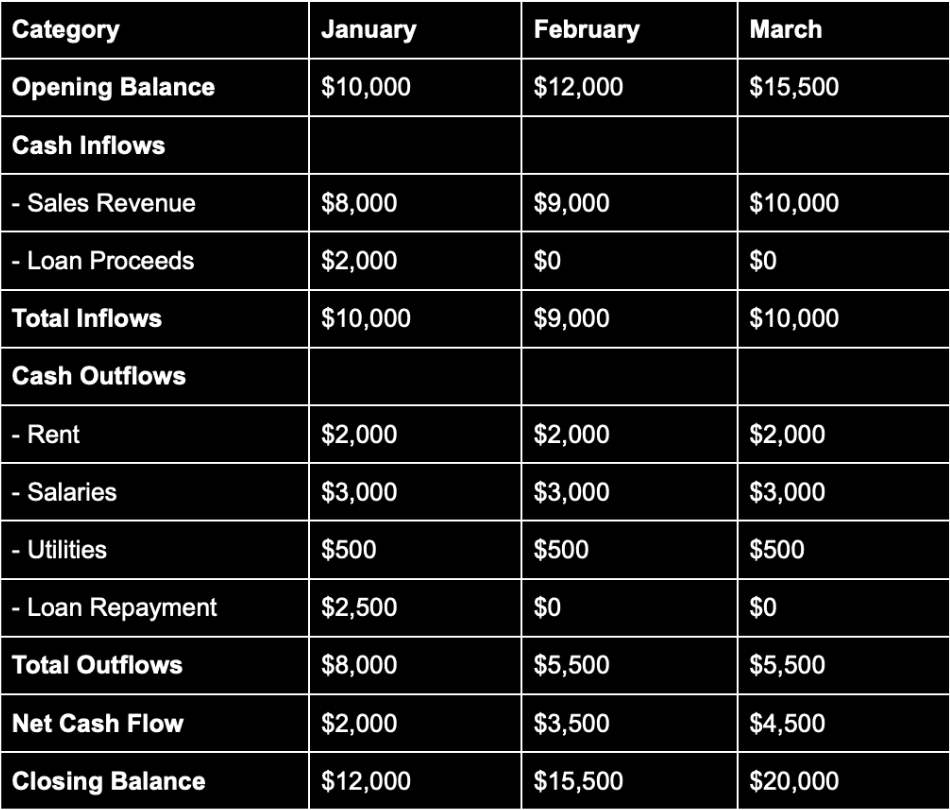
Here’s an example of a simple cash flow projection for a three-month period:
Mistakes to avoid - cash flow projections limits and how to avoid them
Accurate cash flow projections require grounded assumptions and attention to potential pitfalls.
Key Pitfalls to Watch For
Unrealistic Assumptions
Avoid optimistic numbers; stick to realistic, data-driven figures.
Acceptable variance: Keep deviations within 5%; anything higher requires revisiting assumptions.
Overestimating Collections & Payables
Reflect customer payment behavior accurately, especially if payments arrive late.
Account for recurring annual or quarterly payables, including potential tax rate changes.
Inaccurate Sales Timing
Avoid overly generous sales estimates.
Base projections on realistic sales patterns to maintain accuracy.
Ignoring Seasonal Trends
Account for seasonal fluctuations or industry cycles using historical data.
Overlooking Contingencies
Prepare for unforeseen events (e.g., economic shifts, market changes) by incorporating buffers.
Lack of Scenario Planning
Create best-case, worst-case, and moderate scenarios to assess cash flow under various conditions.
Best Practices for Reliable Projections
Use customer payment patterns to align accounts receivable accurately.
Reflect industry-specific trends in your cash flow model.
Build contingency plans to cushion unexpected disruptions.
By addressing these pitfalls and aligning projections with real-world data and trends, businesses can create dependable cash flow models and better navigate financial uncertainties.
Challenges and Limitations of Cash Flow Projection
Accuracy Issues: Projections depend on estimates, which may not always be precise.
Unforeseen Events: Sudden market shifts or emergencies can disrupt cash flow.
Time-Consuming: Preparing detailed projections requires significant effort.
Best Tools for Cash Flow Projection
Excel or Google Sheets: Flexible but manual.
Accounting Software: Tools like Xero or QuickBooks automate cash flow tracking.
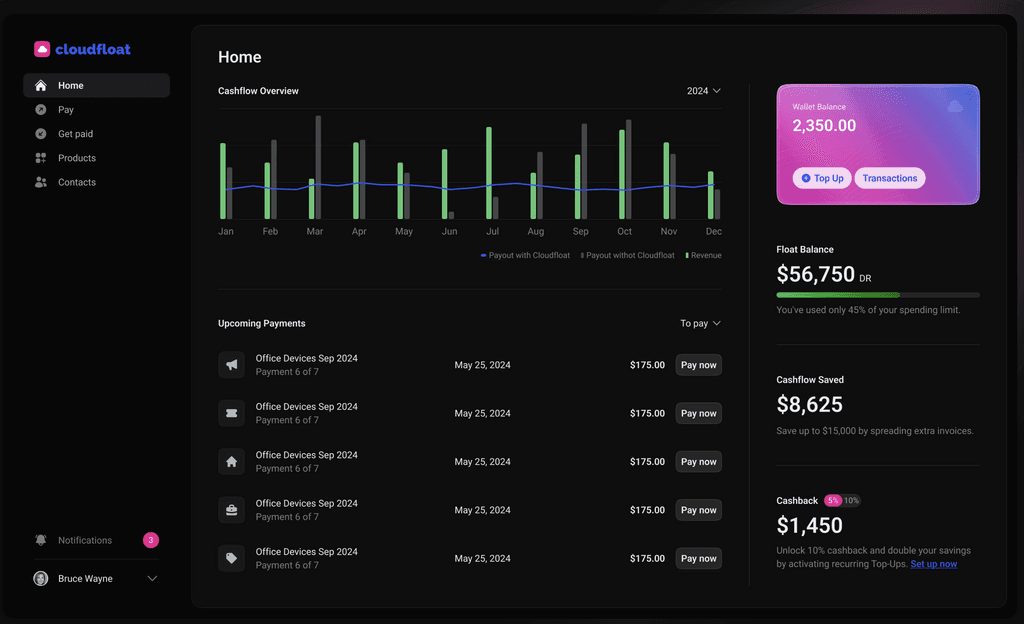
Cloudfloat: A cutting-edge solution to optimise cash flow with real-time payment flexibility and detailed reporting.
Best Practices for Cash Flow Projection
Cash flow projection best practices continue to evolve with changing business needs. Cloudfloat stands out by offering a seamless, innovative solution for cash flow management that integrates effortlessly into your financial planning.
Be Conservative: Underestimate inflows and overestimate outflows for a buffer.
Review Regularly: Update projections as business conditions change.
Use Automation: Leverage tools like Cloudfloat for accuracy and efficiency.
Scenario Planning: Prepare for best-case, worst-case, and most likely scenarios.
Real-World Applications of Cash Flow Projection
As a startup ourselves, we understand the vital role cash flow management plays in ensuring stability and growth. Cash flow projection is especially critical for businesses to plan effectively and make informed decisions.
Startups: Plan for initial funding and manage early-stage expenses to ensure a solid financial foundation.
Seasonal Businesses: Prepare for fluctuations by projecting periods of high and low activity.
Growth-Oriented Businesses: Assess whether you can afford expansions, invest in new opportunities, or hire additional staff confidently.
Cash flow projections empower businesses of all types to navigate challenges and seize opportunities with clarity.
Why Choose Cloudfloat?
Cloudfloat goes beyond traditional cash flow tools, offering:
Flexible Payment Solutions: Split payments to manage cash flow effortlessly.
Real-Time Insights: Monitor and optimise your cash flow with ease.
Stress-Free Planning: Eliminate the guesswork with our innovative features.
Solve your cash flow challenges today - choose Cloudfloat, the trusted partner for SMEs!
FAQs
What’s the main goal of a cash flow projection?
To ensure you have enough cash to cover operational needs and avoid liquidity crises.
How often should I update a cash flow projection?
Review and update projections monthly or whenever significant business changes occur.
Can cash flow projections prevent financial crises?
Yes, they help identify potential cash flow gaps early, allowing you to take corrective action.
What is the best tool for creating a cash flow projection?
Cloudfloat offers unmatched flexibility and automation for accurate projections and better cash flow management.
Common questions
Five components: cash inflows such as sales revenue and loans, cash outflows such as payroll and rent, the opening balance at the start of the period, net cash flow, and the closing balance, which equals the opening balance plus inflows minus outflows.
A cash flow projection focuses on the long-term financial outlook, using expected income and expenses to plan for the future, while a cash flow forecast gives a shorter-term view of day-to-day cash movements that is essential for managing liquidity.
Review and update projections monthly, or whenever significant business changes occur. Rolling forecasts that fold in actual performance and changing conditions give a dynamic, more accurate view of your cash position.
Unrealistic assumptions, overestimated collections, inaccurate sales timing, ignored seasonal trends, overlooked contingencies and a lack of scenario planning. Keep variances within 5% and revisit your assumptions whenever they run higher.
Startups use projections to plan initial funding and manage early-stage expenses, seasonal businesses to prepare for swings between high and low activity, and growth-oriented businesses to judge whether they can afford expansion, new investments or additional staff.